Tampilkan postingan dengan label organ. Tampilkan semua postingan

Senin, 20 Januari 2014

Your Brain - Use it or Lose it!


HotScience │Petrosains

Cow's brain
The brain is the microprocessor of your body, controlling almost everything that you do.
It’s a complex organ with responsibilities that belies its weight, which is a mere 1.5kg!
The brain is the crown jewel of the human body - without it we cease to exist.

How it works  
The 3 basic units of the brain:

The nervous system is a complex, sophisticated system that regulates and coordinates the body's basic functions and activities. It is made up of two major divisions - central nervous system (consisting of the brain and spinal cord) & peripheral nervous system (consisting of all other neural elements).  
The Science Engagement at HotScience
Neurological disorders & treatment
There are over 600 known neurological disorders & conditions - treatment options for many of them are very limited.  A neurological disorder is a disease or injury of the central nervous system that causes paralysis of any part of the body.  It may be due to physical injury to the brain, spinal cord or nerves, or biochemical causes.  Sometimes the cause may be unknown and only the effects are seen.  Neurological disorders are common and can be life-threatening.

Some disorders:
Epilepsy, Alzheimer's disease & other dementias, cerebrovascular diseases including stroke, migraine & other headache disorders, multiple sclerosis, Parkinson's disease, neuroinfections, brain tumours, traumatic disorders of the nervous system such as brain trauma, and neurological disorders as a result of malnutrition.

Diseases that attack the nervous system: 
Infections (bacterial, viral or fungal), cancers (malignant or benign), degenerative conditions (such as multiple sclerosis and Parkinson's disease), and disorders of function (e.g. epilepsy, Tourette's syndrome).
Food which can make our brain healthier  
Many scientists the world over have done researches on ‘food for the brain’.  However studies on the effects of food on the brain are relatively young. Scientists know that certain foods and diets are better for the brain, but figuring out why is still in progress. 
Explore brains
Research suggests that four different types of chemicals and nutrients interact with the brain positively.
1. Glucose
The brain draws nearly all its energy from glucose. 

2. Fatty Acids
Polyunsaturated fatty acids, aka omega-3 and omega-6 help strengthen the synapses in our brain related to memory.

3. Amino Acids
Amino acids come from protein-rich foods and help connect the neurotransmitters which are essential for keeping your brain sharp. 

4. Antioxidants
Antioxidants help regulate the oxidative stress that destroys brain cells. The stress is caused when our body is converting glucose to energy and extra oxygen is created called free radicals. Antioxidants block them so our brain doesn't have to work as hard.
The Science Engagement at HotScienc
Science Engagement Session at HotScience Petrosains
The two days session focused on brain basics – the different parts and how it works.  Some interesting interactive activities were also prepared by the University to help the public understand better this complex topic. On-going research on Alzheimer’s disease was also shared in the form of a mice which is afflicted with Alzheimer’s disease and how certain foods help alleviate the disease.  Those brave and not squeamish were invited to touch the cow, rabbit & rat brains – a rare opportunity for many! 
The Science Engagement at HotScience


This article is written in conjunction with Science Engagement Session at HotScience, Petrosains from 29-30 June 2013 with scientists from UiTM –
1. Prof. Dr. Abu Bakar Abdul Majeed, pharmacist-cum-neuroscientist & Assistant Vice-chancellor (Research), UiTM
2. Prof. Dr. Kalavathy Ramasamy, head of the Collaborative Drug Discovery Research (CDDR) Group at the Faculty of Pharmacy, UiTM
3. Dr Lim Siong Meng, a senior researcher, UiTM

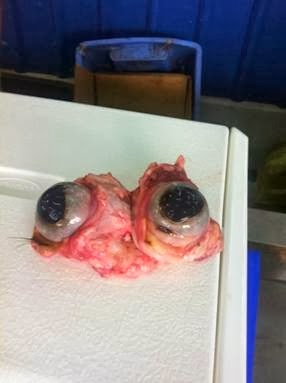


Ingin tahu tentang mata?


Dalam menjalani kehidupan seharian, banyak perkara yang kita perlu fahami supaya pengetahuan yang diperolehi dapat dimanfaat semasa ia diperlukan. Misalnya, dengan cara memahami bagaimana mata kita berfungsi, ia secara tidak langsung membantu kita mengetahui punca-punca dan membolehkan kita mencegah dari jangkitan penyakit yang berkaitan dengan mata. Kita juga mampu membuat keputusan yang tepat ketika hendak mendapatkan sebarang rawatan mata daripada pakar perubatan sekiranya berlaku jangkitan penyakit terhadap mata.
Secara definisi, mata merupakan satu organ yang telah terbentuk untuk mengesan cahaya. Secara ringkas, ia berfungsi untuk mengesan sama ada keadaan sekeliling terang atau gelap. Pada kebiasaannya, semua benda hidup mempunyai sepasang mata. Ia berbentuk hampir sfera, berisi bahan seperti gel optik jernih yang dikenali sebagai gelemaca, dengan kanta fokus dan otot yang dikenali sebagai iris mata yang mengawal kadar cahaya yang masuk. Iris mata ini mengawal bukaan anak mata atau dikenali juga sebagai pupil, iaitu bulatan hitam di tengah-tengah bahagian berwarna di dalam mata.

Di Petrosains, kita dapat mempelajari mengenai struktur mata secara terperinci melalui aktiviti ‘pembedahan mata lembu’. Tujuan aktiviti ini adalah untuk melihat dan mengenal pasti bahagian –bahagian dalam mata seperti kornea, kanta, iris dan retina serta fungsinya. Mata lembu dipilih dan digunakan kerana struktur mata lembu adalah hampir sama dengan mata manusia.
Pada kebiasaannya, mata bertindak dengan memancarkan imej ke atas retina yang sensitif kepada cahaya. Kornea dan kanta akan menumpukan cahaya yang masuk ke atas retina, yang mengaktifkan suatu tindak balas kimia dan menghasilkan isyarat yang untuk dihantar ke otak melalui saraf optik.

Cahaya yang masuk dari luar akan melepasi kornea dan melalui gelemair sebelum sampai ke kanta. Gelemair membantu mengekalkan bentuk cembung kornea dan melembapkannya. Seterusnya cahaya itu akan melalui gelemaca sebelum sampai di retina. Di sinilah terletak banyak sel-sel yang sensitif kepada cahaya.
Pastinya mata merupakan anugerah yang sangat berharga kepada semua benda hidup. Jadi, kita perlu menjaga dan memelihara kesihatan mata. Salah satunya adalah dengan mengamalkan pemakanan sihat seperti pengambilan ubi keledek, lobak merah dan sayur-sayuran hijau yang kaya dengan sumber vitamin A dimana ia dikatakan adalah baik untuk mata kita. Elakkan juga dari menyentuh mata dalam keadaan tangan yang kotor kerana ia dapat menginfeksi mata kita dan akan mengakibatkan mata terdedah kepada pelbagai penyakit mata.
Untuk mencuba melakukan pembedahan mata lembu, sertai aktiviti 'Cow Eye Dissection' di Petrosains sempena Petrosains Science Festival 2013 dari 22 - 27 Oktober 2013. Maklumat lanjut boleh didapati di www.sciencefestival.my 
#petrosainsfest 


Posted by Ayu
Learning Specialist, Petrosains


Organ Donation and Transplant


HotSciencePetrosains

In Malaysia organ donation is a delicate matter especially among the older generation.  Fear basically due to misinformation and in certain circumstances the lack of it is one of the reasons.  Younger Malaysians in general are however more receptive.  According to Dr. Sh. Mohd Saifuddeen, these fears are unfounded as a procedure has been put in place to ensure organ donation is done in a proper and respectful manner.
A person has to be brain dead before any organ can be removed.  According to Malaysian Society of Transplantation “Brain death is a clinical diagnosis. The presence of irreversible brain damage must be established. Metabolic factors must be ruled out as the cause of the patient’s condition. The patient must be apnoiec (i.e. makes no respiratory effort). The patient is totally unreceptive and unresponsive with the absence of brain stem reflexes while being properly ventilated”.
From the perspective of Islam, Muslims are encouraged to donate their organs.  In Malaysia, organ donation and transplantation had been decreed since June 1970 (Details: http://www.agiftoflife.gov.my/eng/organdonation2.html).  Other main religions of Malaysia; Buddhism, Hinduism, Christianity and Sikhism, allows their followers to donate organs under the premise that no commercialism or exploitation is involved.  It is a holy thing to donate organs as the donor is saving lives (Details:   http://www.agiftoflife.gov.my/eng/organdonation3.html).


Meet Malaysia’s first mechanical heart recipient and also recipient of a normal heart, Muhd Fikri Norazmi
Malaysia’s first mechanical heart recipient and also recipient of a normal heart, Muhd Fikri Norazmi, was also present to share is experiences – the pain he had to endure and the discipline he had to instil upon himself to complete his education.
Dr. Sh. Mohd Saifuddeen reminded those who wish to pledge their organs for donation to discuss with their families and loved ones first so that they are aware of your intentions.  This will greatly avoid conflicts later.
More information at:
• Pusat Sumber Transplan Nasional (HKL),
www.agiftoflife.gov.my
• The Malaysian Society Of Transplantation, www.mst.org.my

About the speaker

Dr. Sh. Mohd Saifuddeen Bin Sh. Mohd Salleh in action
Dr. Sh. Mohd Saifuddeen Bin Sh. Mohd Salleh is a Consultant Expert at the Programme for Applied Sciences and Islamic Studies at the Academy of Islamic Studies, the University of Malaya since September 2012.  He holds a degree in chemistry and a master’s degree in business administration from the University of Glasgow, as well as a master’s degree in history and philosophy of science, and a doctorate degree in the same field from the University of Malaya.
Prior to joining the university, he was with the Malaysian Strategic Research Centre (MSRC) and the Institute of Islamic Understanding Malaysia (IKIM). He also served as Executive Director as a private consultant at Yayasan Ilmuwan between 2005 and 2012.
He is a member of the Public Awareness Action Committee on Organ Donation and contributes regularly to awareness programmes organised by the National Transplant Resource Centre (NTRC). He is also a member of the Research Ethics Committee, Universiti Teknologi MARA (UiTM) and distinguished fellow of the research advisory committee of the Malaysian Biotechnology Information Centre (MABIC).
He has written nearly 50 academic articles published in books and journals.  In terms of research, he has been involved in a number of research projects in particular on issues of Islam and science. His research interest is applied Islamic ethics.
The attentive listeners


Azima's blog♔ Template by Ipietoon Cute Blog Design and Bukit Gambang